
The Shot Heard Round the World: Lexington & Concord, April 19, 1775

Opening Hook
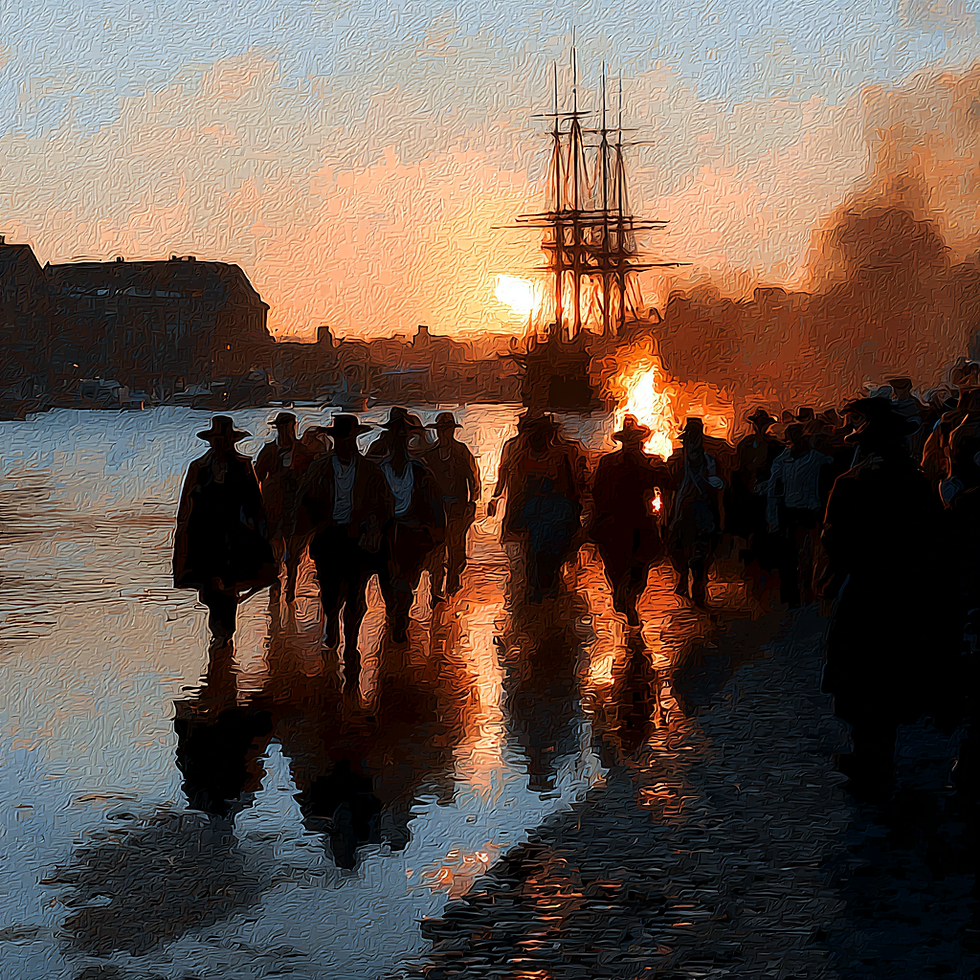
April 19, 1775. The sun rises over a cold Massachusetts Green. Seventy-seven Massachusetts militiamen stand in rough formation, most of them farmers, most of them not entirely sure what's about to happen. Across the field, 700 British regulars march up the Boston Road in perfect columns. Somewhere between the two lines, a single shot rings out. Nobody knows who fired it. Nobody ever will. But within minutes, eight Americans are dead, and the Revolution has its first martyrs. The British Empire is about to discover that it has badly misjudged the people it thought it ruled.
The Story
By the spring of 1775, Massachusetts was a powder keg with a short fuse. British General Thomas Gage, military governor of the colony, had decided enough was enough. The colonists had been stockpiling weapons in Concord — muskets, powder, cannons — preparing for a fight everyone could feel coming. Gage's orders from London were to act before that fight started. Seize the weapons. Arrest the ringleaders, Samuel Adams and John Hancock, reportedly hiding in Lexington. Stop the rebellion in its crib.
On the night of April 18, roughly 700 British regulars assembled quietly on the Boston Common and rowed across to Cambridge. They planned to move in darkness and strike Concord at first light. But the colonists had built an intelligence network the British underestimated. Paul Revere, William Dawes, and later Samuel Prescott rode out that night with the alarm. By the time the regulars reached Lexington around 5 a.m., militia Captain John Parker had already assembled roughly 77 men on the town green.
What Parker said next is carved into stone in Lexington today: 'Stand your ground. Don't fire unless fired upon. But if they mean to have a war, let it begin here.' British Major John Pitcairn ordered the militia to disperse. They began to — slowly, reluctantly, grumbling. Then the shot. Nobody to this day knows whose finger was on the trigger. What followed was a brief one-sided massacre: eight Americans killed, ten wounded, one British soldier grazed. The British column reformed and marched on toward Concord, thinking the day was theirs.
It wasn't. At Concord's North Bridge a few hours later, the tables turned. Hundreds of militia from surrounding towns had converged. When the British tried to hold the bridge, the Americans fired a coordinated volley — the 'shot heard round the world,' as Emerson would later call it. This time the British broke. And then came the long walk home. For the next 20 miles back to Boston, the redcoats ran a gauntlet. Militiamen fired from behind stone walls, trees, and farmhouses. It was guerrilla warfare against the most professional army on earth, and it worked. By the time the British limped back to Boston that night, they had suffered 273 casualties — nearly three times the American losses. The war had begun, and America had won the first round.
Key Dates
April 14, 1775 — General Gage receives written orders from London to seize colonial weapons and arrest rebel leaders.
April 18, 1775, 10 p.m. — British troops begin assembling on Boston Common; Paul Revere and William Dawes begin their ride.
April 19, 1775, 5 a.m. — First shots fired on Lexington Green. Eight militia killed.
April 19, 1775, 11 a.m. — Battle of Concord's North Bridge. Americans force the British to retreat.
April 19, 1775, sunset — Battered British column reaches Boston. 273 casualties. The Revolution is underway.
June 17, 1775 — Battle of Bunker Hill. The Revolution is no longer deniable.
Pivotal Figures
Captain John Parker — Lexington militia commander, a 45-year-old farmer dying of tuberculosis, who still stood on the green that morning with his men. He died later that year, but his words live on in granite.
Major John Pitcairn — British officer who commanded the advance on Lexington. Later killed at Bunker Hill. He claimed until his death that he never gave the order to fire.
Samuel Prescott — The unsung hero of the night rides. Of the three riders who set out to warn Concord (Revere, Dawes, and Prescott), only Prescott made it all the way there. Revere was captured; Dawes was chased off. Prescott got through.
Why It Matters
Lexington and Concord weren't decisive battles in the military sense — they were small, brief, and involved fewer than 2,000 men total. But they were decisive in every other way. They proved that American colonists would fight, that they could fight effectively against professional soldiers, and that there was no going back to being subjects. The shot fired on Lexington Green, whoever fired it, ended one world and opened another. Two hundred and fifty-one years ago today, this nation's story started being written in gunpowder instead of ink.
Did You Know?
The first person killed in the Revolution — the very first casualty on Lexington Green — was Jonas Parker, cousin to Captain John Parker. He had sworn never to run from British soldiers. He died reloading his musket on the spot where he'd stood. Massachusetts still celebrates Patriots' Day every April 19th, and the Boston Marathon is run the same day — a modern race over the same ground those militiamen crossed.


Comments